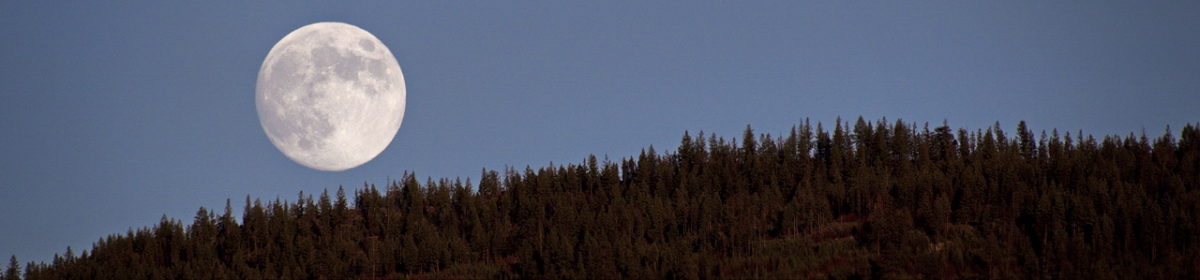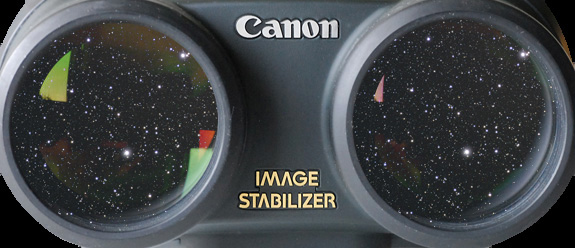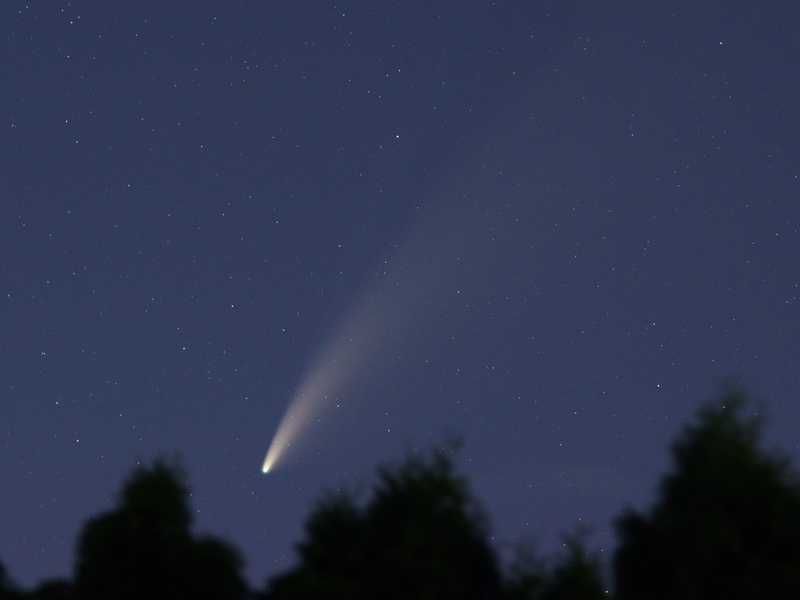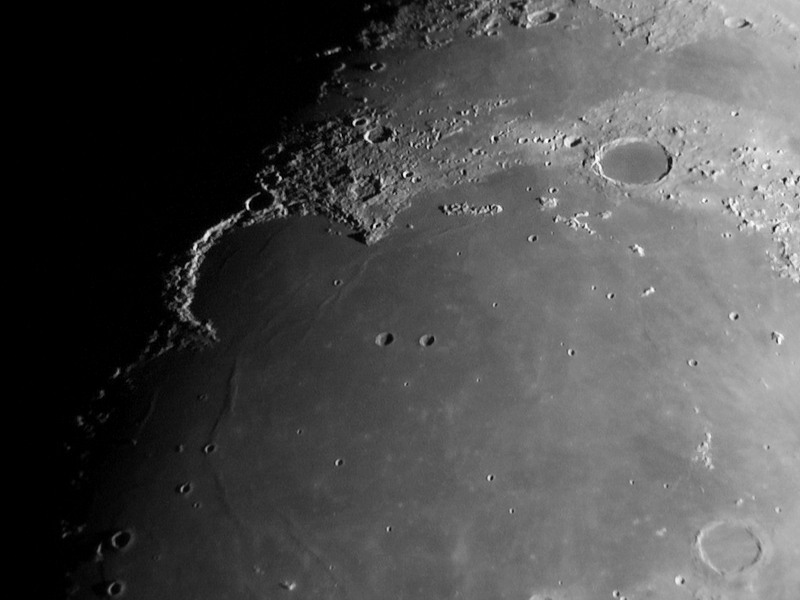
In the March 2012 Sky & Telescope

Cover image

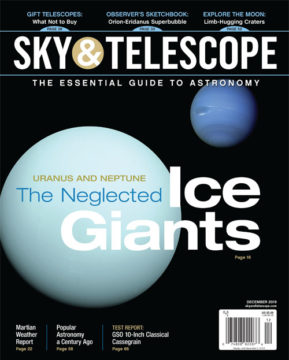
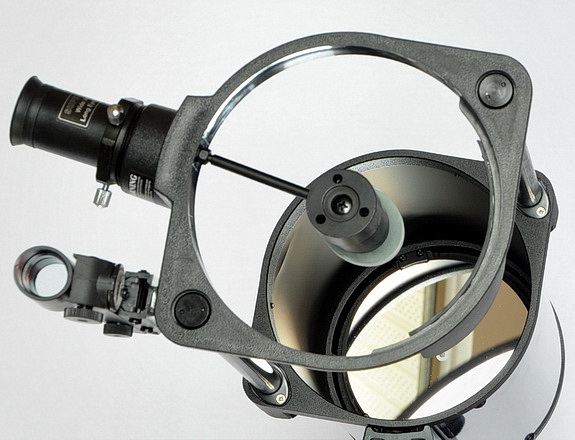
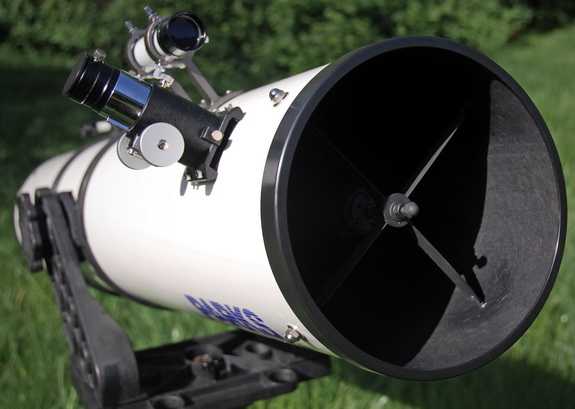
Will I save money building my own telescope? It's one of the most common questions in the equipment universe. The prevailing conventional wisdom says “no,” but my own experiences suggest the answer isn’t as cut and dried as that. So, I sat down and did a ton of research and amassed a mountain of data to find out what the real answer is. The results of my efforts are distilled into this month's Telescope Workshop column. I think you’ll find it a surprising and provocative read.

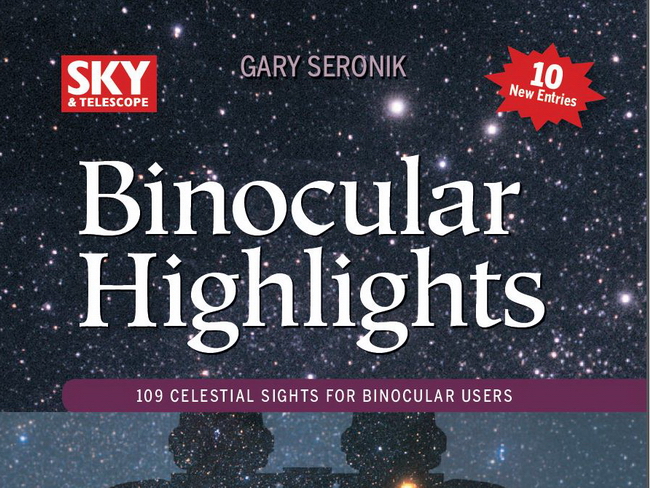
Cancer is such an indistinct constellation that you would hardly expect it to house a pair of Messier objects and an attractive binocular double. And yet, that’s exactly what we find. In this issue's Binocular Highlights column, I describe the Crab’s finest treasures.

To find out what else is in the issue, visit S&T’s web site, www.SkyandTelescope.com.

Happy reading — and as always, your comments, questions, and suggestions are welcomed.
Gary

Review: Fujinon Techno-Stabi Binoculars

Group shot

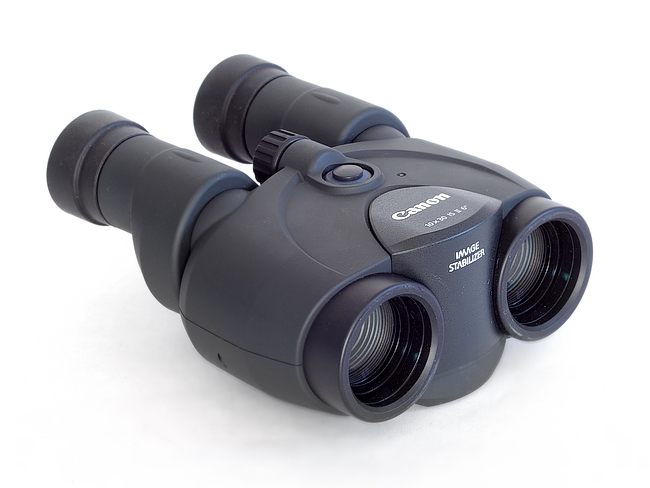
Although the Canon line of image-stabilized binoculars (reviewed here)
is the most comprehensive, there are other manufacturers making similar products. The one that I most often get e-mail requests to evaluate are the Fujinon 14×40 Techno-Stabi binoculars. Little wonder — Fujinon is a highly regarded manufacturer popular with backyard astronomers.

In the January/February 2012 SkyNews

Cover image

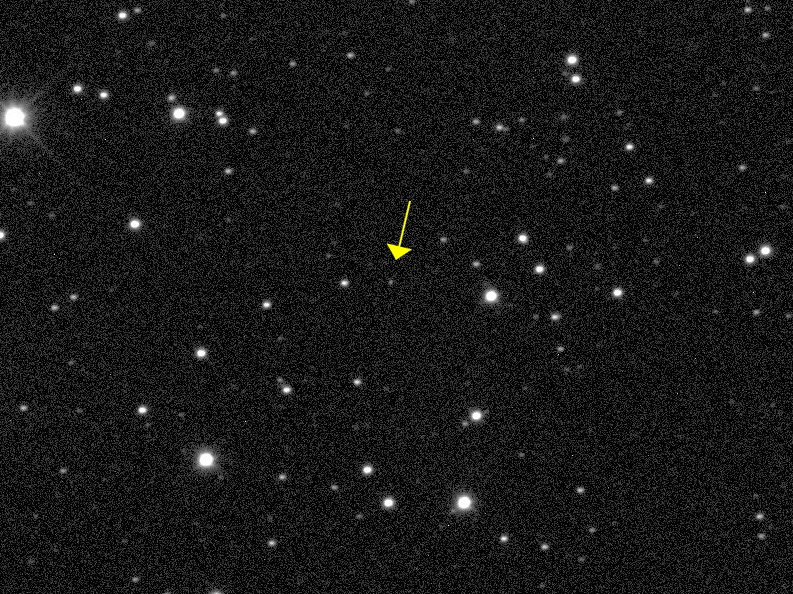
How did an unremarkable crater become the centre of a storm of controversy? Aim your telescope at the western shore of Mare Serenitatis and see for yourself. From today’s perspective, it’s perhaps difficult to appreciate just how little was known about the Moon until quite recently. And in an environment where little is known with certainty, the realm of the possible is expansive indeed. In my On The Moon column this issue I recount the strange case of a mysterious little crater called Linné.

For those of you unfamiliar with SkyNews, read on . . .

In the February 2012 Sky & Telescope

In the February 2012 Sky & Telescope

Cover image

In this issue's Binocular Highlights column we zero in on what is arguably the finest of all the Messiers: M42. It’s doubtlessly spectacular, but is it more so than the Pleiades? Hard to say.

This month's Telescope Workshop column features a nifty binocular mount assembled from various pieces of astro junk. Australian amateur Stu Favilla’s contraption is not only a scavenger’s delight, but it also provides steady support for his big binos.

To find out what else is in the issue, visit S&T’s web site, www.SkyandTelescope.com.

Centre-Dotting Your Scope's Primary Mirror

Collimated scope

There’s no getting around the fact that collimating your reflector telescope (Dobsonian or otherwise) is much easier when the centre of the primary mirror is marked with a paper doughnut. Thankfully, these days a good number of commercially made telescopes come with their mirrors pre-marked. But if your scope isn’t so equipped, don’t worry — the procedure for adding a centre doughnut isn’t difficult. In fact, the hardest part might be convincing yourself that you can take out the primary mirror without inviting disaster.

Collimation Tools: What You Need & What You Don’t

Collimation tools

Aligning the optics of your reflector telescope is crucial for optimal performance — all the more so if you have a telescope with a focal ratio of f/5 or less. A good tool can make the difference between successful collimation, and an exercise in frustration that encourages you to settle for “good enough.” But selecting the right tool can be more confusing than actually using it. On-line discussions offer a bewildering array of opinions and experiences — some of which posted by people who make and sell the products they (naturally enough) recommend. So what do you really need to collimate your scope?

New Web Site!

FilmAdvance title

I invite everyone to check out my new web site, FilmAdvance.com.
As regular visitors to this site already know, in addition to astronomy, photography is a big passion of mine. So, to keep the content of this site tightly focused on stargazing, telescope making, and related topics, I started FilmAdvance.com as an outlet for my photographic explorations. There will inevitably by some astronomy related content posted there, but mostly it’s about seeing the universe through the lens of a camera, instead of the eyepiece of a telescope.

This site will roll on much as it always has with new article being added regularly, but I hope you’ll also look in at FilmAdvance often to see what I’ve been up to with my cameras and darkroom!

Gary

More Hinge Trackers

New tracker

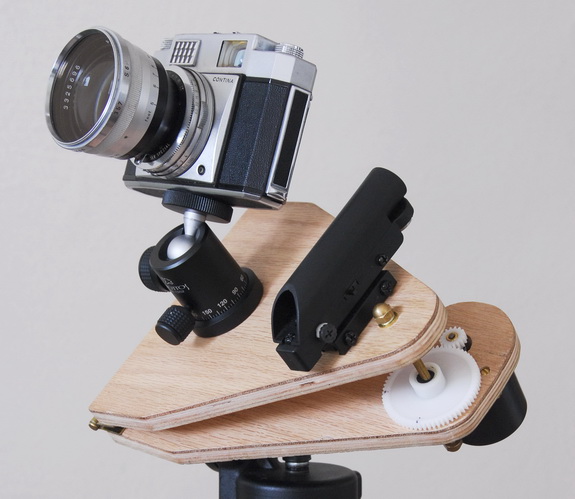
In the August 2011 issue of Sky&Telescope magazine I described how to build a simple, inexpensive, and effective camera tracking platform that I call the Hinge Tracker. As I mentioned in that article, numerous variations are possible. Two that I’ve built are outlined here.

Telescope-Making Books: The Good, the Bad, and the Unnecessary

ATM books

Although the internet can be a wonderful resource for first-time telescope makers, it can also be a source of great frustration. No matter what the topic, it’s possible to find completely contradictory advice. Far more dependable are good ol’ fashioned books — especially those that have stood the test of time.

Postcards From Costa Rica (2011)

Sunset

Sunset as seen from 10° north latitude.
(Camera: Agfa Isolette II; Film: Fuji Reala 100, 120 format)

Our 8th annual Costa Rica Southern Star Party ran from February 27th to March 6th and proved to be one of the biggest and best of the series. There was plenty of starlight and sunshine and a good time was had by all.

Review: Canon’s Image-Stabilized Binoculars

Canon ISB

Combining optical excellence with rock-steady views, Canon's image-stabilized binoculars are a stargazer's dream come true. But is one best for you?

For a long time, 7×50 or 10×50 binoculars were considered the best choice for stargazing. Such binos are relatively lightweight, inexpensive, and capable of delivering fine wide-field views of the heavens. But most people find that hand-held 10×50s represents the upper limit of the weight and magnification comfort zone. Models featuring higher magnification or more aperture require a tripod or dedicated binocular mount for steady views. Even 10×50s rarely work near their potential without support. Unfortunately, such devices ensure that an instrument much loved for its portability and convenience becomes encumbered with as much paraphernalia as a small telescope. Enter the image-stabilized binocular.

The Big Red One: My Optimized 6-inch f/9 Reflector

Big Red 6-inch f/9

Attention to detail is what separates a regular Newtonian reflector from one optimized for high-contrast performance. This 6-inch f/9 uses every trick in the ATM’s book to deliver superb planetary and deep-sky views.

This was the first telescope I made using my own optics. Like most telescope makers, I got started the easy way, by building Dobsonians with mirrors ground by others. But one day I got bit with the mirror-making bug. I blame my friend Lance Olkovick, our local club’s mirror-making ace. But why a long-focus 6-inch? At the time I was a hardcore Jupiter junkie and was convinced that a long-focus Newtonian would deliver excellent views of my favourite subject. I also wanted to prove a point.

My Monopod Binocular Mount

Bino mount in use

Requiring only a few parts, this simple and effective setup provides stable images.

In my Telescope Workshop column in the August 2010 issue of Sky&Telescope, I wrote about how you can build my newest (and best) binocular mount. Presented here are some additional photos to aid you in constructing one.

Exploring Low-Power Limits

Andromeda

The old saying that less is more rings true for telescope magnification, but there are many factors to consider before choosing your ultimate wide-field eyepiece.

Low-magnification views of the night sky can be breathtaking. It’s only with low power that we can fully appreciate the splendor of the Pleiades, the foggy expanse of the Andromeda Galaxy, or the wispy filaments of the Veil Nebula. But if discussions on internet forums are anything to go by, there's a lot of confusion out there about how magnification, field of view, and exit pupils relate to each other. And without understanding these factors, you might end up shortchanging your telescope’s low-power capabilities.

How To Collimate An Astroscan

Astroscan

The Astroscan’s greatest strength is its bare-bones simplicity, which unfortunately also means it lacks adjustments for achieving optical alignment.

Edmund Scientific's Astroscan has been around since 1976. Its enduring appeal is at least partly due to its no-muss-no-fuss simplicity. You plop it down in its base, put in an eyepiece, and you’re good to go. The optics come factory aligned, so you never have to worry about collimation. Unless, that is, the mirrors go out of alignment. And since the Astroscan doesn’t have adjustments to correct this malady, you’re stuck. But are you really? For the brave (or, perhaps foolhardy), there is a procedure you can perform that will put the scope’s optics back into alignment.

Telescope Making Diary: Week #1

Lance’s scope.

My dear fiend Lance Olkovick (a.k.a. Nanook of the North) observing Jupiter at dawn from Mt. Kobau with his 12½-inch f/5. The scope I'm building will be similar to this.

The nights are cooling down and the days becoming increasingly overcast and grey. That can mean only one thing: it’s Telescope Making Season again. And so, I’ve decided to tackle a project I’ve had in mind for some time now, namely, a rebuild of my 12¾-inch truss Dobsonian.

Beat the Heat: Conquering Newtonian Reflector Thermals — Part 1

Newtonian thermal gradient

What you need to know when it comes to optimizing your scope’s thermal behavior.

Generations of backyard astronomers have debated why, inch-for-inch, the performance of a high quality refractor usually edges out an equal-quality Newtonian reflector. This disparity is most apparent when viewing low-contrast planetary detail — the images in a good refractors often have a touch more snap to them. Is there some intrinsic shortcoming in the design of the Newtonian reflector that makes this inevitable?

A Tracking Platform for Astrophotography

Tracker lead image

This simple, easy-to-build mount provides the perfect introduction to long-exposure astrophotography.

Round stars. That’s the difference between astrophotos captured with a camera that tracks the sky’s motion versus one that doesn’t. Traditionally you’d make a tracked photo by placing your camera piggyback on a telescope with a motorized equatorial mount. But that’s a lot of equipment to deal with if all you want are some nice-looking constellation portraits or a shot of a newly discovered comet — especially if you have to travel to reach your favorite dark-sky destination.

Talking About the Moon

Recently I did a segment for the show SUPERnova, which is produced by the talented team of Tyler Gamsby and Shannon Hartley for the Royal Astronomical Society of Canada's Vancouver Centre. The results are viewable above.

This is episode #4. Be sure to check out the other shows too. All are very nicely done and have unusually high production values. SUPERnova is part of the Vancouver Centre's International Year of Astronomy outreach program.

Enjoy!

Gary

My 8-inch Travelscope

Travelscope

Have scope, will travel! This Dobsonian not only gives great views, it also fits into an airplane’s overhead storage compartment.

One of the best reasons for learning to build telescopes is that you can make instruments that perfectly match a particular observing need or circumstance. As an editor at Sky & Telescope, my “circumstance” happily involved a lot of travel, and as a result I found myself dreaming of a telescope that I could take with me as I zig-zagged across North America from one star party to the next. It seemed a shame to arrive under the dark skies of the Texas Star Party or Mount Kobau without a telescope of my own.

Syndicate content